
|
15-19 October 2026, Muğla (Turkey)
|
|
|
|
Plenary and invited speakers


Jennifer Barton, Professor, Director of BIO5 Institute, University of Arizona, Tucson, USA
Dr. Jennifer Barton received BS and MS degrees in electrical engineering from the University of Texas at Austin and University of California Irvine, respectively. She worked for McDonnell Douglas (now Boeing) on the Space Station program before returning to The University of Texas at Austin to obtain a PhD in biomedical engineering in 1998. She is currently professor of biomedical engineering, electrical and computer Engineering, optical sciences, and agriculture and biosystems engineering at the University of Arizona. She has served as department head of biomedical engineering, associate vice president for Research, interim vice president for Research, and is currently interim director of the BIO5 Institute, a collaborative research institute dedicated to solving complex biology-based problems affecting humanity. Barton develops miniature endoscopes that combine multiple optical imaging techniques, particularly optical coherence tomography and fluorescence spectroscopy. She evaluates the suitability of these endoscopic techniques for detecting early cancer development in patients and pre-clinical models. Additionally, her research into light-tissue interaction and dynamic optical properties of blood laid the groundwork for a novel therapeutic laser to treat disorders of the skin’s blood vessels. She has published over 90 peer-reviewed journal papers in these research areas. She is a fellow of SPIE- the International Optics Society, and a fellow of the American Institute for Medical and Biological Engineering.
Plenary talk title: «To be announced»
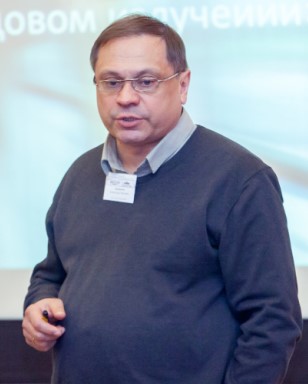
Alexander P. Shkurinov, Professor, Faculty of Physics, M.V. Lomonosov Moscow State University and Academician of the Russian Academy of Sciences, Moscow, Russia
Dr. Alexander Shkurinov in 1985 graduated with honours from the M.V. Lomonosov Moscow State University (MSU), Moscow, Russia. He received his Ph.D. degree in Physics from MSU in 1988. Since 2004 he is a full-time Professor at the Department of Physics of the MSU where he is Head of the Laboratory of terahertz optoelectronics. The research interests of Alexander Shkurinov are mainly centered around the development and application of femtosecond laser techniques, time-resolved spectroscopy of molecules in liquid phase, nonlinear optics and THz techniques and spectroscopy. The results obtained by Alexander Shkurinov have been published in more than 350 scientific papers in peer-reviewed journals.
Plenary talk title: «A Terahertz Subcycle View on Elementary Phenomena in Biological Molecules»
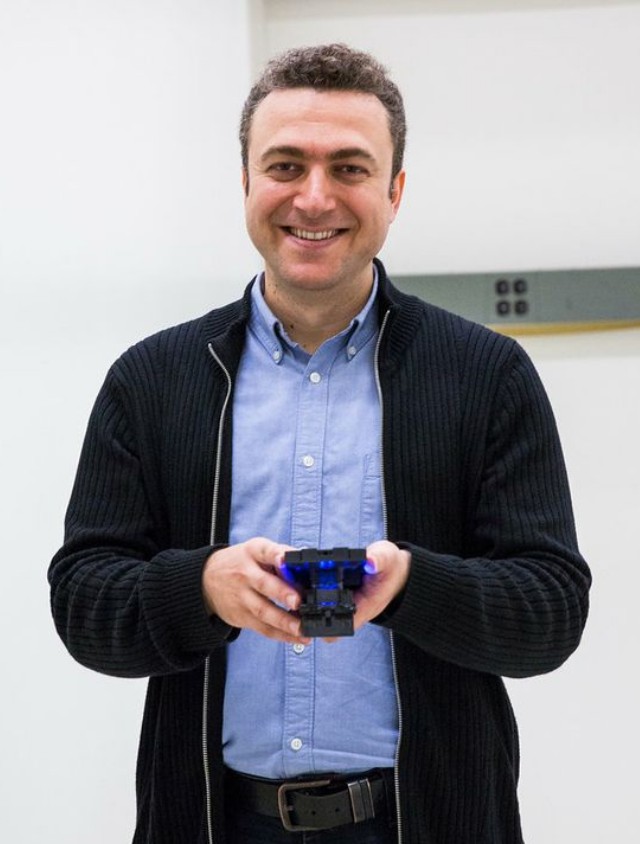
Aydogan Ozcan, Professor, University of California - Los Angeles, fellow of the National Academy of Inventors, Los Angeles, USA
Dr. Aydogan Ozcan is the Chancellor’s Professor and the Volgenau Chair for Engineering Innovation at UCLA and an HHMI Professor with the Howard Hughes Medical Institute. He is also the Associate Director of the California NanoSystems Institute. Dr. Ozcan holds >85 issued/granted patents, and is the co-author of >1200 peer-reviewed publications in leading scientific journals/conferences. He is elected a Member of the National Academy of Engineering (NAE) and a Fellow of National Academy of Inventors (NAI), Optica/OSA, AAAS, SPIE, IEEE, AIMBE, RSC, APS and the Guggenheim Foundation, and is a Lifetime Fellow Member of Optica, NAI, AAAS, and SPIE. Dr. Ozcan is also listed as a Highly Cited Researcher by Web of Science.
Plenary talk title: «Virtual Staining of Label-free Tissue»

Jürgen Popp, Professor, Friedrich Schiller University Jena, Jena, Germany
Dr. Juergen Popp studied chemistry at the universities of Erlangen and Würzburg, Germany. After his PhD in Chemistry he joined Yale University for postdoctoral work. He subsequently returned to Würzburg University where he finished his habilitation in 2002. Since 2002 Juergen Popp holds a chair for Physical Chemistry at the Friedrich-Schiller University Jena, Germany. Since 2006 he is also the scientific director of the Leibniz Institute of Photonic Technology, Jena. Juergen Popp is a world leading expert in Biophotonic / optical health technology research covering the complete range from photonic basic research towards translation into clinically applicable methods. Jürgen Popp is author of >1.100 papers in peer-reviewed journals which have been cited >43.400 times, which results in an h-index of 87. In addition Popp’s innovations have led to 21 patents. He has given more than 200 invited talks on national and international conferences (among them more than 60 keynote/plenary lectures). In addition, he organized numerous conferences and workshops (e.g. the world largest conference on Raman spectroscopy ICORS in 2014). He is Editor-in-Chief of the Journal of Biophotonics. Furthermore, he is a leading partner in various national and international projects in cooperation with academic, clinical and industrial partners. Very recently under the leadership of Juergen Popp the “Leibniz Center for Photonics in Infection Research (LPI)” has been put by the German government as one of three projects on the national roadmap for research infrastructures. The infrastructure committed to research transfer will receive three-digit million funding. Juergen Popp is member of the Photonics 21 Execututive Boeard and has been frequently asked as a contact person for media and politics. Professor Popp has received numerous awards for his research, including the prestigious Pittsburgh Spectroscopy Award in 2016. In 2023, Jürgen Popp received an honorary doctorate from the University at Albany - State University of New York (USA) and the Charles Mann Award from the Federation of Analytical Chemistry and Spectroscopy Societies (FACSS).
Plenary talk title: «From Biophotonics to Patients: AI-Driven Raman Spectroscopy for Precision Diagnostics and Therapy»

Halina Rubinsztein-Dunlop, Professor, The University of Queensland, Brisbane, Ausrtalia
Dr. Halina Rubinsztein-Dunlop's research interests are in the fields of atom optics, laser micromanipulation, nano optics, quantum computing and biophotonics. She has long standing experience with lasers, linear and nonlinear high-resolution spectroscopy, laser micromanipulation, and atom cooling and trapping. She was one of the originators of the widely used laser enhanced ionisation spectroscopy technique and is well known for her recent work in laser micromanipulation. She has been also working (Nanotechnology Laboratory, Göteborg, Sweden) in the field of nano- and microfabrication in order to produce the microstructures needed for optically driven micromachines and tips for the scanning force microscopy with optically trapped stylus. Recently she led the team that observed dynamical tunnelling in quantum chaotic system. Additionally Prof. Rubinsztein-Dunlop has led the new effort into development of new nano-structured quantum dots for quantum computing and other advanced device related applications.
Plenary talk title: «To be announced»
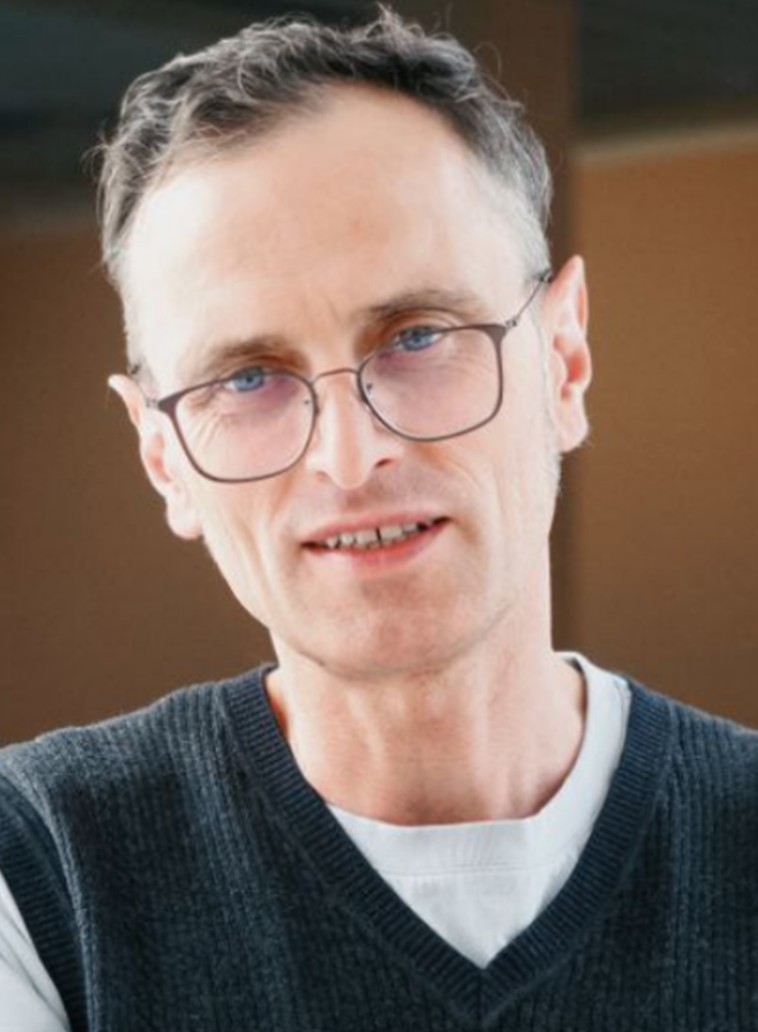
Pavel Melentiev, Professor, Institute of Spectroscopy of the Russian Academy of Sciences, Troitsk, Russia
Dr. Pavel Melentiev received his bachelor’s degree from the Moscow Institute of Physics and Technology in 1997, his PhD from the Moscow Institute of Physics and Technology in 2004, and his Doctor of Science degree from the Institute of Spectroscopy in 2022. He is currently a general scientific researcher at the Institute of Spectroscopy. His research focuses on investigating light–matter interactions at the nanoscale for applications in spectroscopy, sensing, and DNA sequencing.
Plenary talk title: «Photonics for DNA Sequencing»

- To be announced.